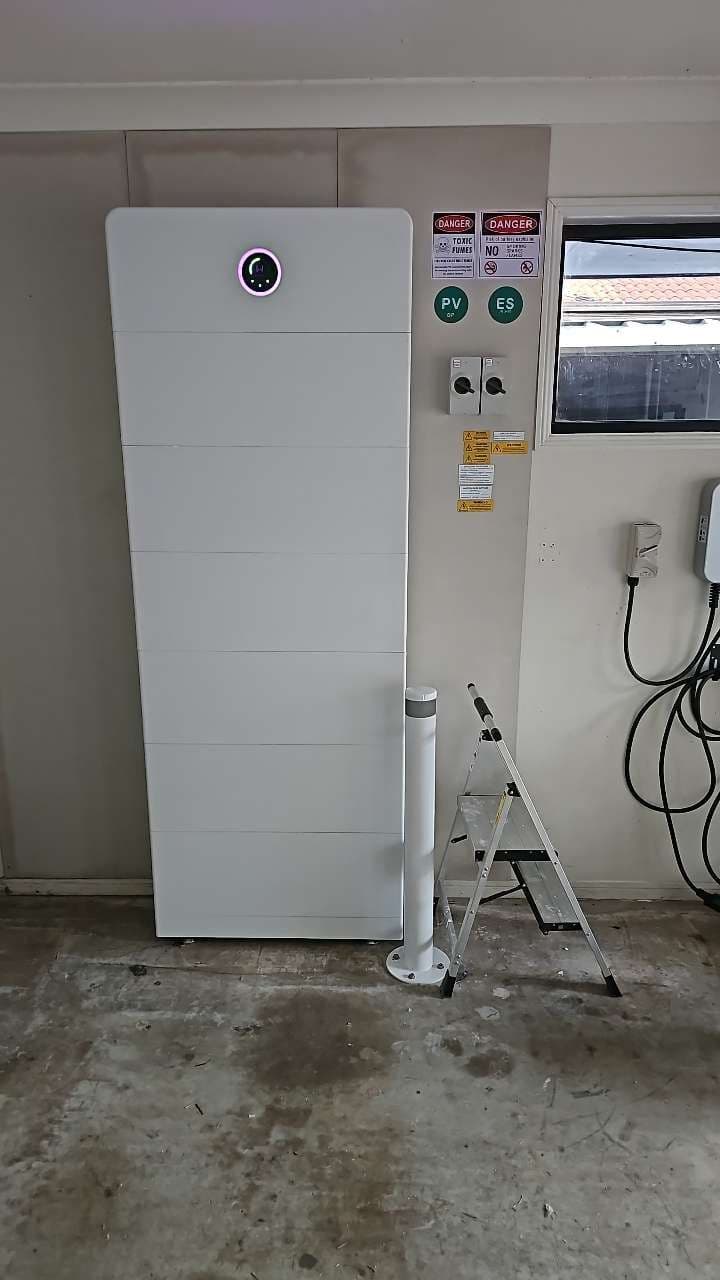
How the Federal Battery Discount Operates
The federal Cheaper Home Batteries Program launched on 1 July 2025 to make domestic and commercial battery storage financially viable across Australia. Unlike older state programs that required homeowners to lodge lengthy paperwork and wait months for a government cheque, this federal scheme is built directly into the existing Small-scale Renewable Energy Scheme (SRES).
Under this framework, your installer calculates the number of Small-scale Technology Certificates (STCs) your battery storage generates based on its usable kilowatt-hour capacity and warranty rating. You sign an STC assignment form handing over those certificates to the installation business, and the financial value is deducted as an upfront discount directly on your itemised tax invoice. You pay only the net balance.
The scheme targets an approximate thirty percent reduction in upfront equipment cost for typical residential capacities. For Queensland homeowners, pastoralists, and commercial shed operators, this makes storage accessible without complicated financing hurdles or state means testing.
The May 2026 Tiered Capacity Rules
When the program first commenced in mid-2025, a flat certificate multiplier applied across the entire battery. Following government reviews to align incentives with dropping wholesale cell costs and to prevent over-subsidising massive residential systems, the Clean Energy Regulator introduced a three-tier structure effective 1 May 2026.
If your installation takes place in late 2026, your quote is calculated under these active tier bands:
- Tier 1 (0 to 14 kWh usable capacity): Receives the full one hundred percent STC allocation factor. This covers standard residential batteries such as 10 kWh to 13.5 kWh units, delivering the highest dollar discount per kilowatt-hour.
- Tier 2 (14 to 28 kWh usable capacity): Receives a sixty percent allocation factor. This tier suits large suburban homes with ducted air conditioning, electric vehicles, and small commercial workshops.
- Tier 3 (28 to 50 kWh usable capacity): Receives a fifteen percent allocation factor. This covers large rural homesteads, off-grid sheds, and agricultural packing sheds requiring multi-day backup.
- Over 50 kWh usable capacity: Zero certificates. You can physically install a system up to 100 kWh nominal capacity, but every kilowatt-hour above 50 kWh usable is paid entirely out of pocket.
Critical installation timing rule: Under Clean Energy Regulator legislation, your rebate value is legally fixed by the date your installer completes commissioning and signs the Certificate of Testing and Compliance, not the date you sign your proposal. If equipment back-orders push commissioning past a scheduled six-monthly indexation adjustment, the new lower certificate factor applies automatically.
Rules for Off-Grid Sites and Working Farms
One of the most frequent questions from rural Queensland landowners is whether stand-alone power systems qualify for the Cheaper Home Batteries Program. The answer is yes, with specific technical exemptions designed for remote conditions.
For suburban grid-connected homes, federal rules generally mandate that inverters and batteries must be Virtual Power Plant (VPP) capable. This means the hardware must support communications protocols that allow an energy retailer to coordinate charging or discharge during grid peaks. For rural properties, however, remote locations and SWER line constraints make this unworkable.
The federal program explicitly exempts off-grid installations located more than one kilometre from the nearest electricity distribution line from the VPP capability requirement. A station homestead, machinery workshop, or solar bore pump in the Maranoa or Lockyer Valley can install dedicated off-grid inverter-chargers and modular lithium iron phosphate (LiFePO4) storage banks and claim the full tiered STC discount without internet connectivity mandates.
To qualify on an off-grid or rural property, your installation must satisfy three straightforward criteria:
- Paired with solar generation: The battery must be coupled to a new or existing photovoltaic array. Stand-alone battery banks charged solely by a diesel generator or mains trickle feed do not qualify.
- Accredited components: The battery modules and inverter must appear on the Clean Energy Council approved equipment lists under the Battery Assurance Program.
- Accredited installer: Work must be designed and physically supervised by an electrician holding current Solar Accreditation Australia (SAA) credentials with battery storage endorsement.
What Happened to the QLD Battery Booster?
There is widespread confusion across Queensland because search engines still index promotional material for the state government Battery Booster program. That program offered cash rebates of up to $4,000 for standard households and $6,000 for lower-income applicants.
The Queensland Battery Booster program officially closed to new conditional approvals on 8 May 2024.The allocated funding was fully exhausted, and the state Department of Energy has not reopened the scheme. Any solar marketer or telemarketer claiming they can secure you a four-thousand-dollar state government rebate in 2026 is either misinformed or misrepresenting the federal STC discount as a state grant.
Today, the federal Cheaper Home Batteries Program is the only active government incentive program providing upfront discounting for residential and farm battery storage in Queensland.
Three Worked Cost and Sizing Examples
Because the May 2026 tiering structure changes the discount rate as capacity expands, calculating your expected benefit requires breaking the battery down into its usable capacity blocks. Here is how the numbers apply to three common Queensland setups:
Scenario 1: Residential 10 kWh Retrofit (Brisbane / Ipswich)
A suburban homeowner with an existing 6.6kW rooftop solar array adds a 10 kWh usable lithium battery to eliminate peak evening grid tariffs and charge an electric vehicle overnight.
- Capacity tier: Entirely within Tier 1 (0 to 14 kWh at 100% STC factor).
- Discount impact: The system captures the maximum possible discount per kilowatt-hour, typically reducing the installed hardware invoice by approximately twenty-five to thirty percent.
- Net outcome: The property stores daytime rooftop surplus and covers all evening household baseload without drawing peak grid electricity.
Scenario 2: Acreage 26 kWh Storage System (Scenic Rim / Lockyer Valley)
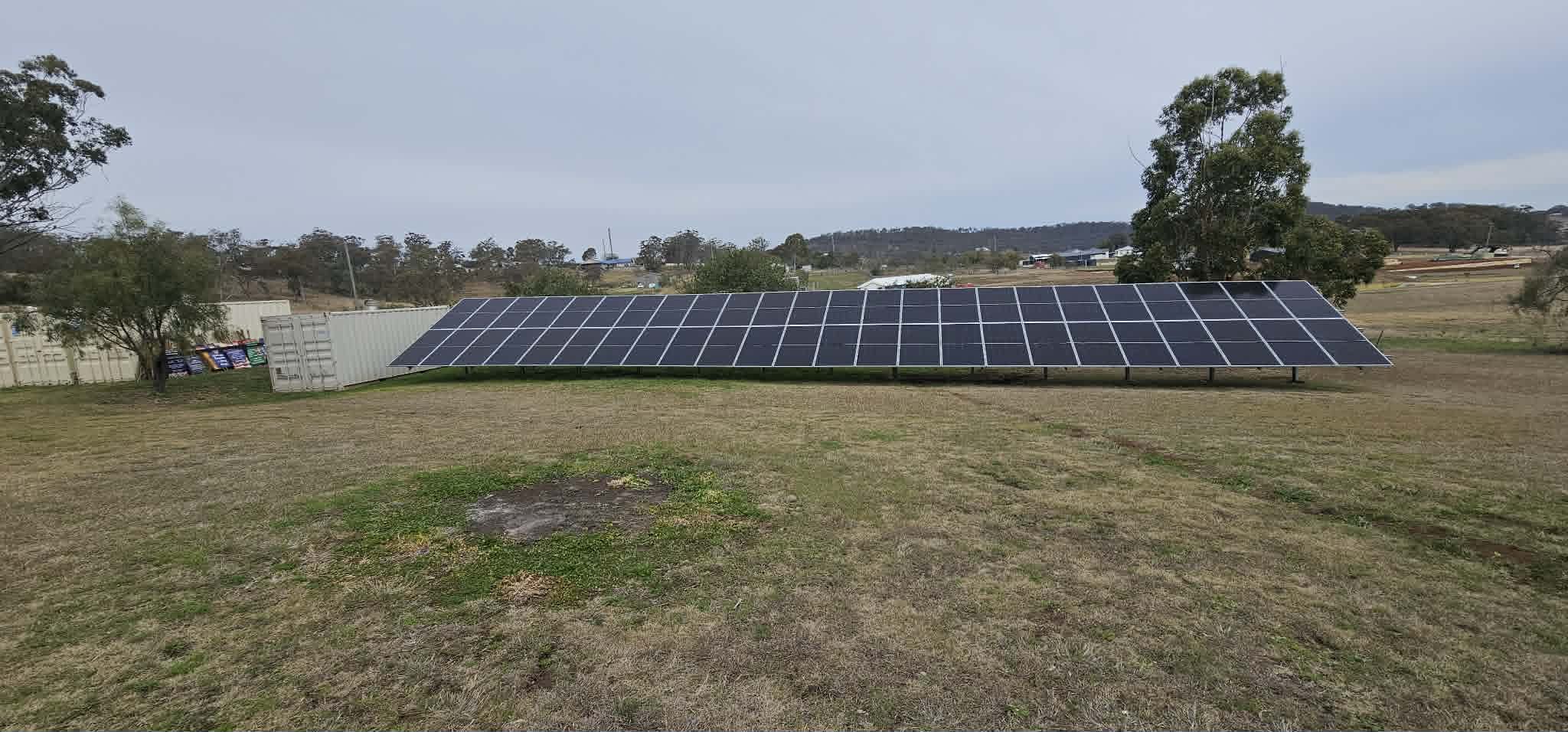
A small acreage property running ducted air conditioning, domestic pressure pumps, and a workshop installs a 26 kWh usable battery paired with a 15kW ground-mounted solar array.
- Capacity tier: The first 14 kWh falls into Tier 1 (100% factor). The remaining 12 kWh falls into Tier 2 (60% factor).
- Discount impact: The discount provides a strong upfront saving on the primary domestic block, with a moderated discount on the top-up capacity.
- Net outcome: The home achieves complete energy independence across eight to ten months of the year, maintaining power through frequent summer storm blackouts.
Scenario 3: Working Farm 45 kWh Off-Grid System (Darling Downs)
A working agricultural property beyond the grid installs a stand-alone power system comprising 24kW of solar, three multiphase inverter-chargers, an auto-start backup diesel generator, and 45 kWh of usable rack-mounted LiFePO4 storage.
- Capacity tier: First 14 kWh at 100% factor, next 14 kWh at 60% factor, and final 17 kWh at 15% factor. The full 45 kWh sits under the 50 kWh lifetime certificate cap.
- Discount impact: The federal program contributes thousands of dollars in upfront certificate value toward the battery bank, offsetting a significant fraction of the initial capital outlay.
- Net outcome: The farm operates critical cold storage, workshop machinery, and water transfer pumps without paying network service charges or running diesel generators continuously.
Compliance Standards and Paperwork
Battery storage is not a plug-and-play appliance. In Queensland, strict electrical safety legislation and Australian standards govern how, where, and by whom batteries can be installed. Cutting corners on compliance risks voiding your building insurance and forfeiting your STC rebate.
Key regulatory standards for battery installations include:
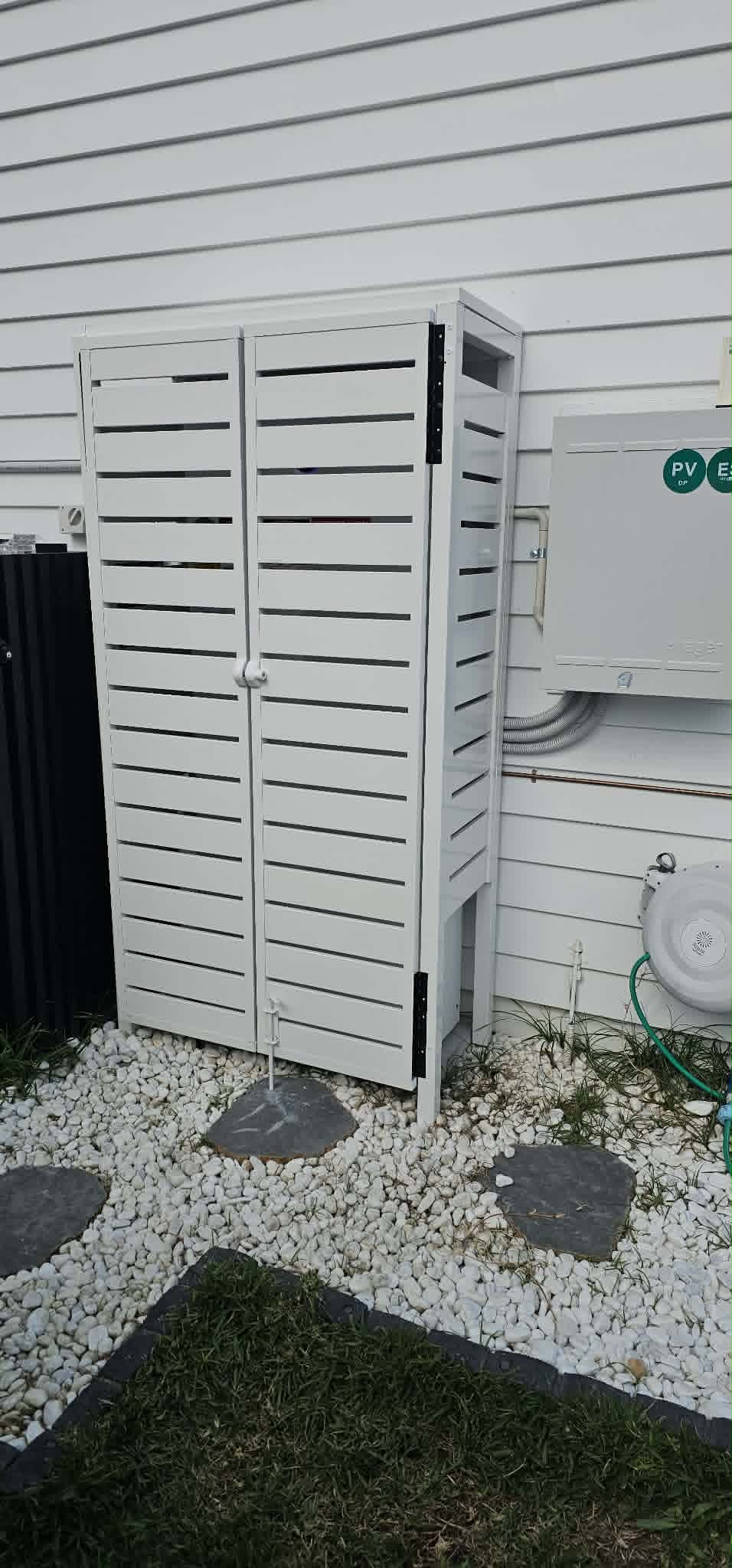
- AS/NZS 5139:2019: The governing standard for battery safety and installation. It dictates mandatory clearances from doors, windows, and property boundaries, requires non-combustible backing barriers when mounting to timber-framed structures, and specifies impact protection bollards in garages and vehicle pathways.
- AS/NZS 5033:2021: Governs the DC cabling, isolation switches, and overcurrent protection linking your solar array to the battery charging controllers.
- AS/NZS 3000 (Wiring Rules): Sets earthing, circuit breaker sizing, and switchboard segregation rules for the entire installation.
When Handy Hands Electrical completes a battery installation or off-grid conversion, our licensed electricians test the system under real load conditions and issue an official Queensland Certificate of Testing and Compliance. This document proves your installation complies with all statutory safety standards and provides the legal verification required by the Clean Energy Regulator to validate your upfront discount.
If you are planning to add battery storage to your home, farm, or commercial shed in South East or regional Queensland, contact our trade team for an honest assessment of your site loads and an itemised quote showing your exact federal rebate.
Boden Snell
QLD Licence 1503588Founder & Licensed Electrical Contractor
Boden has worked in the electrical trade for sixteen years, specialising in off-grid solar, battery storage, and stand-alone power systems for farms, commercial facilities, and island properties across Queensland.