
Farm and Rural Electrical Work Across Queensland
We wire sheds, bore pumps, irrigation and dairies on working farms from Ipswich QLD out to Cape York, and build the underground runs to survive dust, stock and a wet season.
Farm Electrical Is a Different Trade to Suburban Work.
Distances are longer, so voltage drop stops being theoretical and starts costing you pump performance. Loads are heavier and start harder. Everything lives outdoors in dust, heat, damp and the odd curious cow, and when something fails it's rarely convenient. It's a bore that stops in a dry week or a dairy that won't start at 4am.
We've done this work across the Lockyer Valley and Scenic Rim, out through Toowoomba and the Darling Downs, and further into central and north Queensland. The details that matter out here, cable sizing over distance, trench depth and marker tape, correct glanding, stock-proof mounting and surge protection on long runs, aren't optional extras.
Off-grid design is our main line of work, so we do farm electrical with one eye on your energy use. If a pump run or a shed layout would make a future stand-alone system twice as expensive, we'll say so while it's still on paper.
At a Glance
What Farm Electrical Work Covers.
Shed and workshop power.
New shed fitouts, three-phase supply, welder and compressor circuits, lighting that reaches the floor, and enough outlets that nobody runs a lead across the yard.
Pumps, bores and irrigation.
Correct cable sizing over long runs, soft starters or a VSD where the start-up surge justifies one, control wiring, float and pressure switching, and protection that survives a wet season.
Dairy and processing plant.
Plant wiring, vat and chiller circuits, wash systems and the controls around them, scheduled so the shed is ready for the next milking.
Underground runs across paddocks.
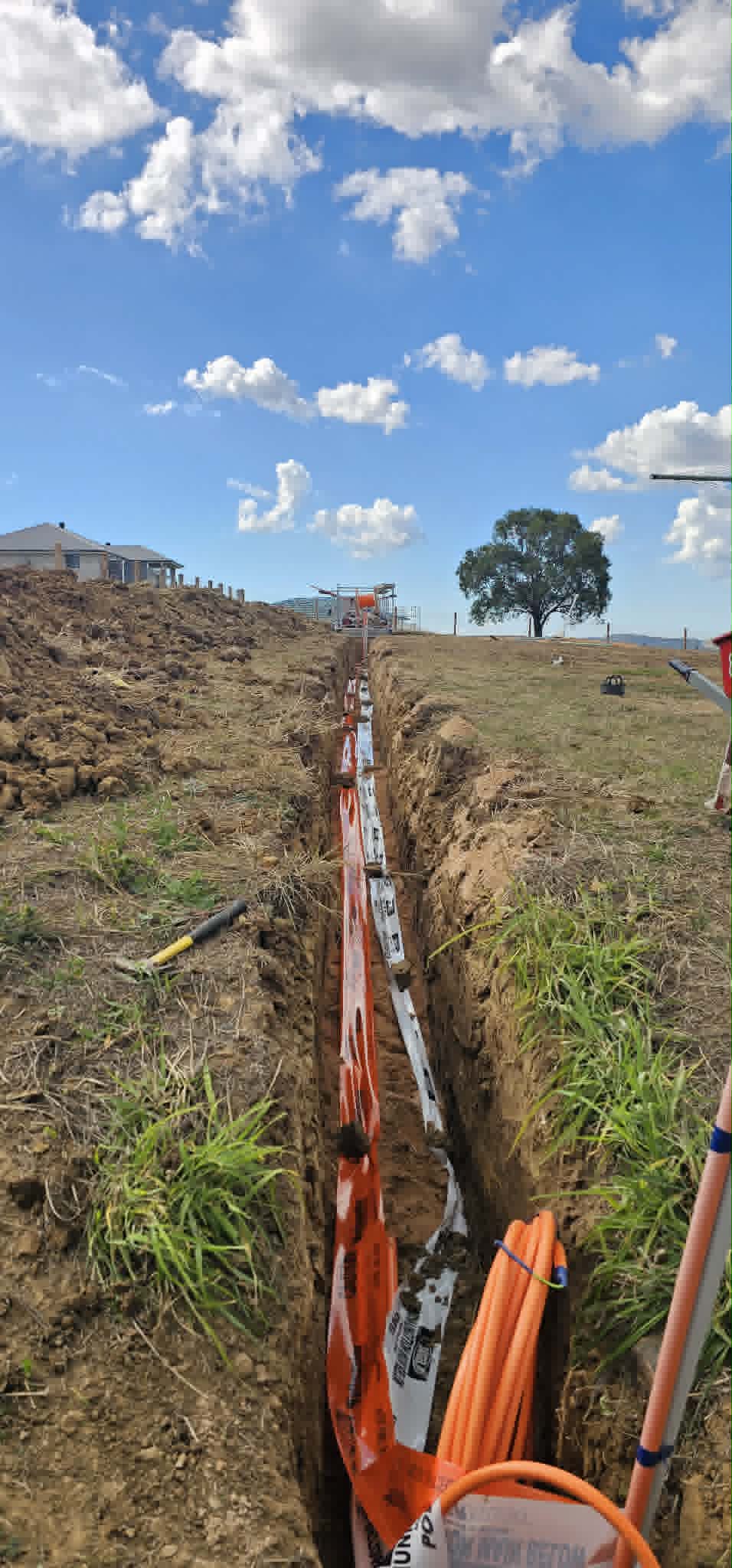
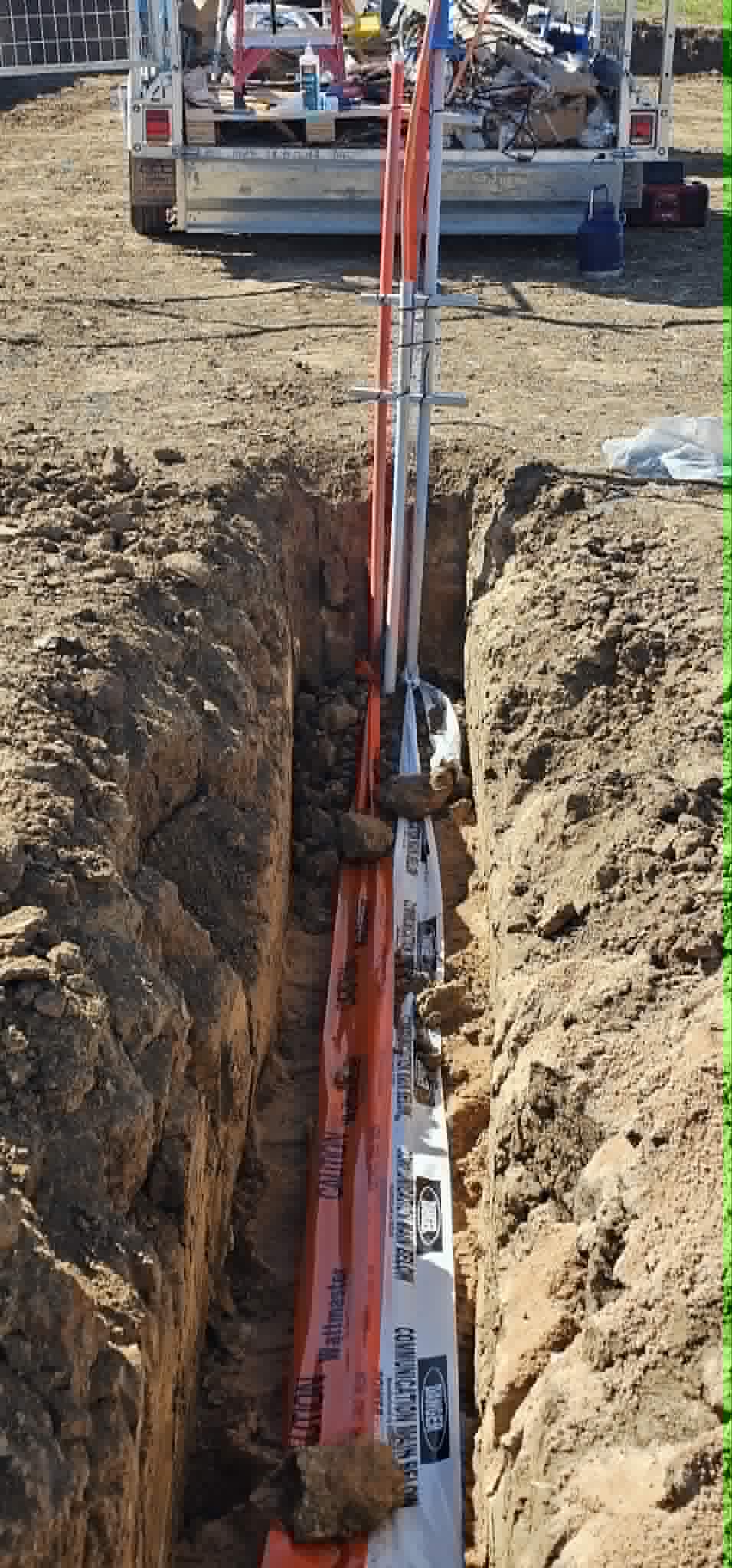
Trenched to depth with marker tape and correctly rated conduit, power and comms kept separate, and documented so the next person to dig knows where it is.
Surge and lightning protection.
Long rural feeders and tall structures collect surges. Protection at the board and at sensitive equipment costs a lot less than a controller replacement.
Solar, storage and off-grid infrastructure.
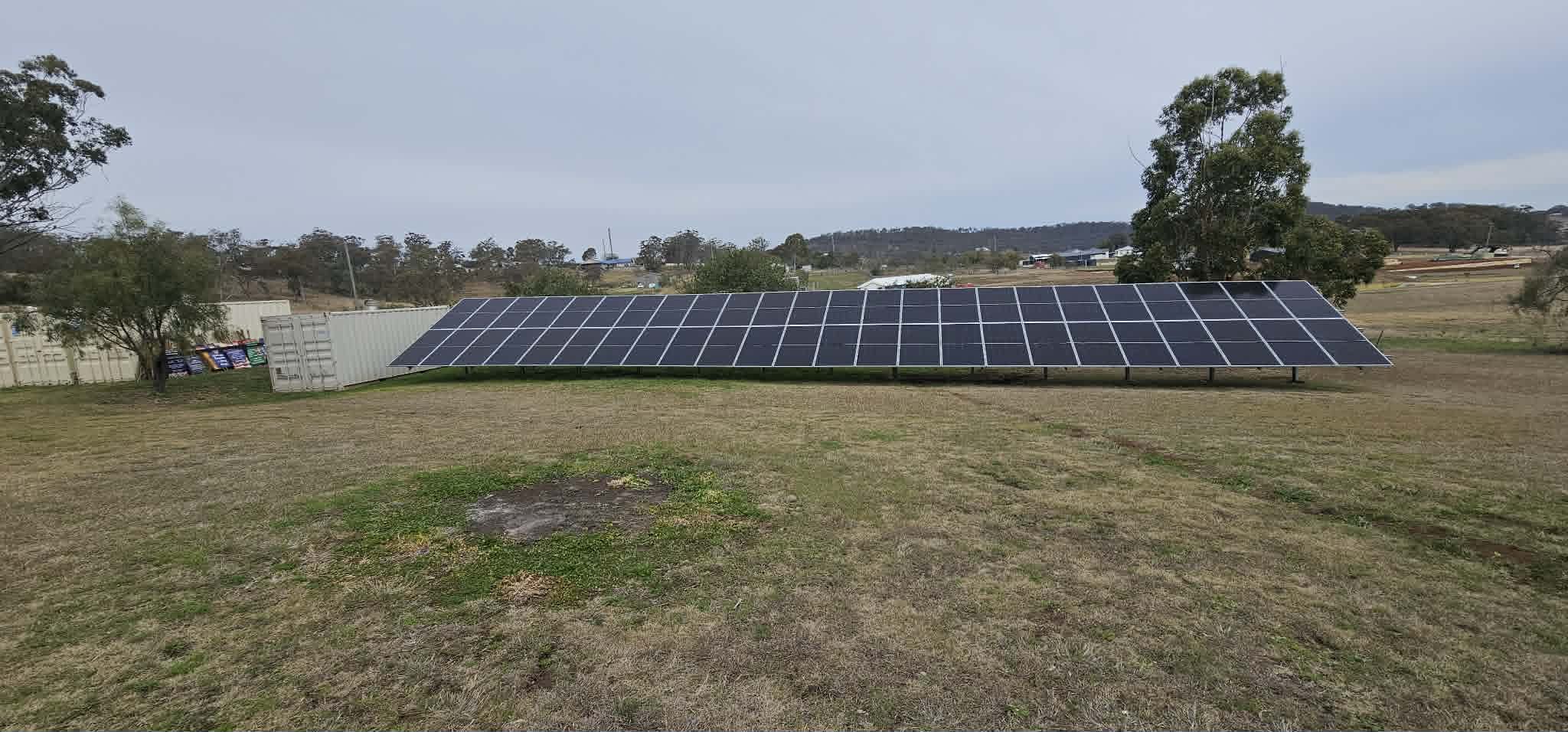
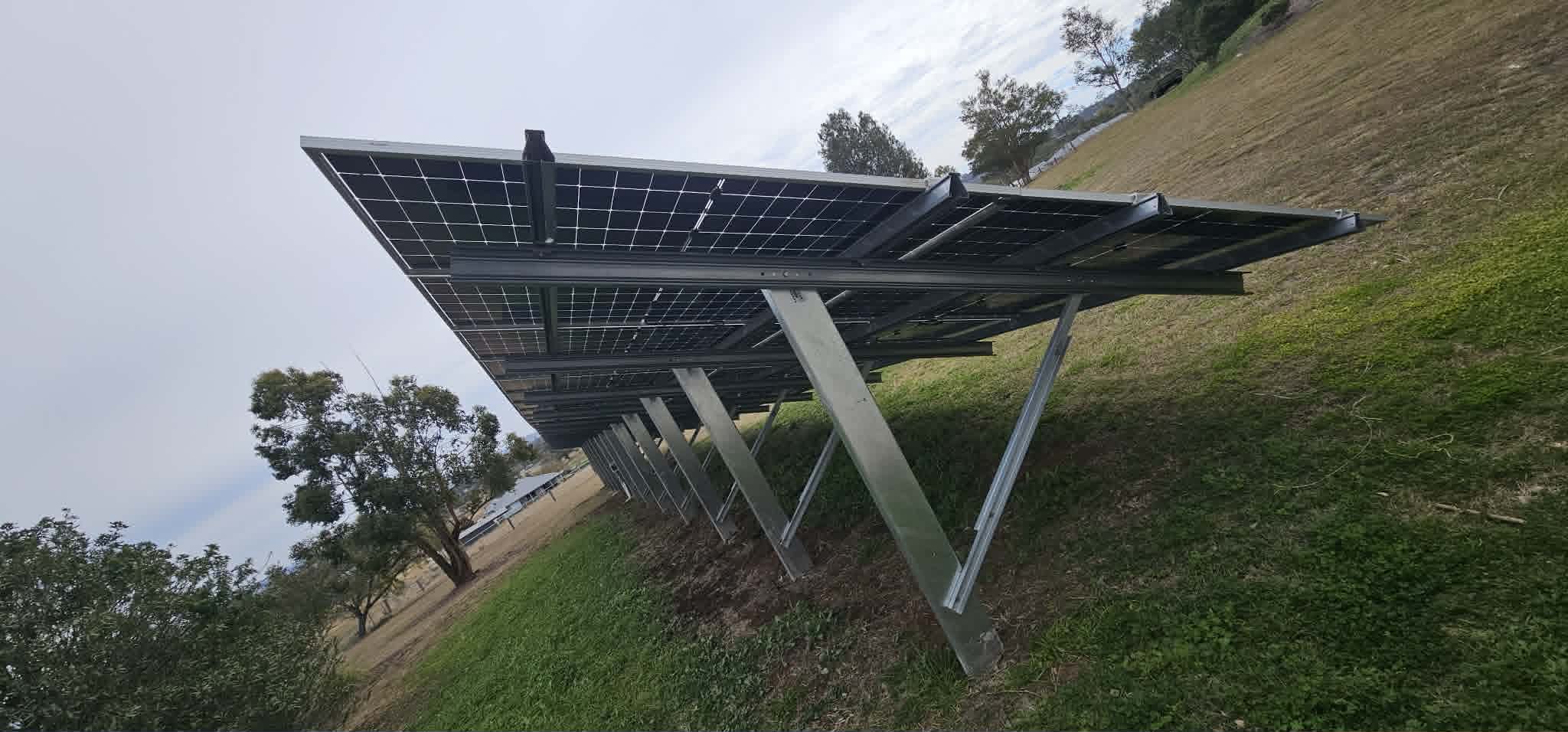
Ground mounts, tilt frames, battery banks and stand-alone power systems, sized to the loads a working farm actually runs.
How We Run Cable Across a Paddock.
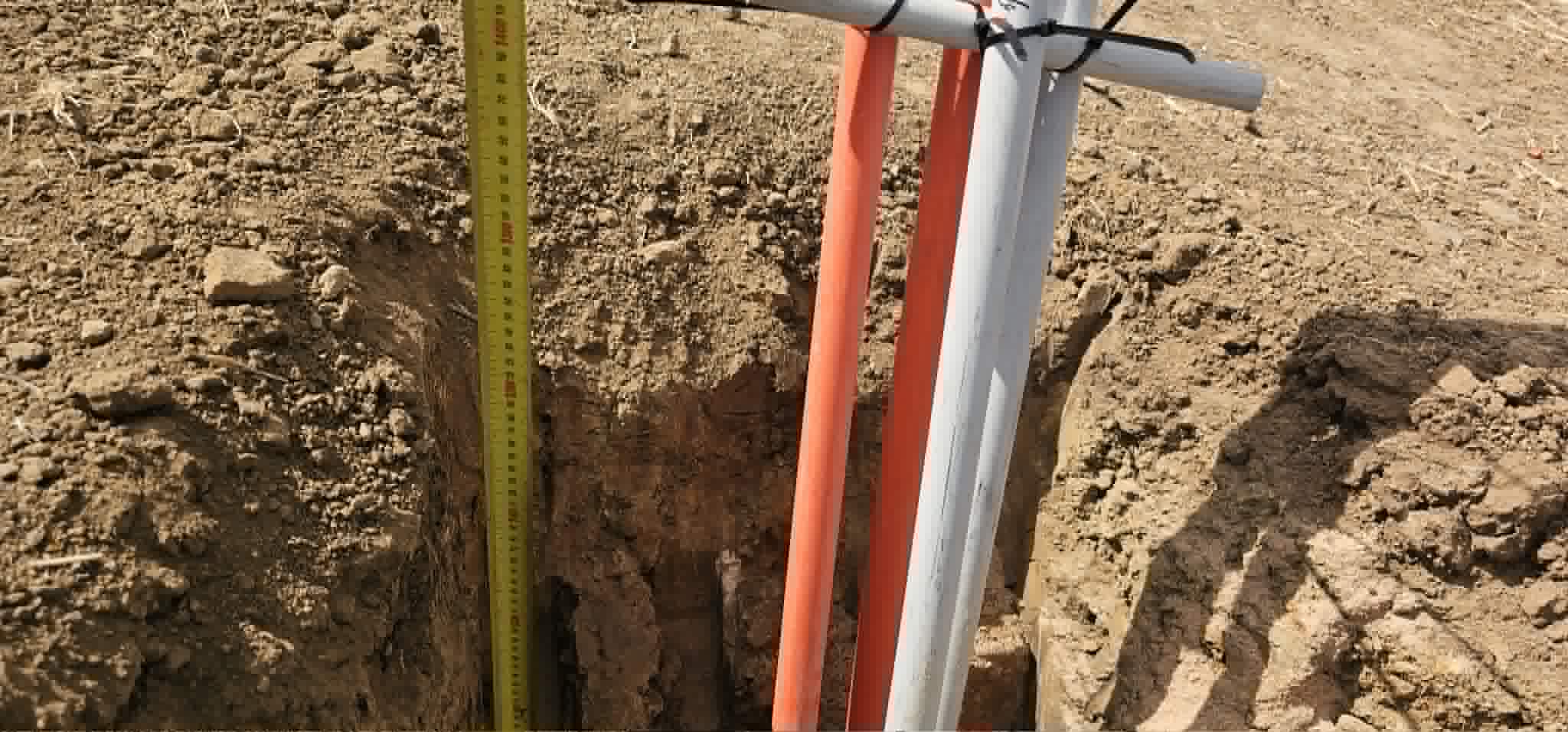
Every rural trench is dug to the depth AS/NZS 3000 requires for the cable type, with marker tape above it and power and communications conduit kept separate. We record the route with a tape measure and photos before backfill, so the next person to dig, including us, knows exactly where it runs.
The other reason we check depth carefully is voltage drop. A longer run needs a heavier cable to deliver the same voltage at the far end, and that calculation is done on every job rather than eyeballed against what fits in the conduit.
Why Does a Bore Pump Trip the Board When It Starts?
A motor starting direct-on-line typically pulls somewhere around 5 to 8 times its normal running current for a second or two, because a stationary motor has no back electromotive force to limit the surge. On a long rural run, or a supply that's already stretched, that spike is often what trips the board, not a fault in the pump itself.
A soft starter ramps the voltage up gradually and typically brings that inrush down to around 2 to 4 times full load current. A VSD, or variable speed drive, goes further again, ramping frequency and voltage together so the motor can start at closer to 1.5 times full load current, and it lets you throttle the running speed too rather than running the pump flat out all the time. We size the starting method to the motor and the supply on every job, rather than defaulting to whatever's on the van.
Voltage drop matters just as much. Run a cable far enough and the voltage arriving at the pump is meaningfully lower than what left the board. The motor responds by drawing more current and running hotter, which is why a pump that keeps failing is often a cable problem wearing a pump costume. We calculate the drop over the actual run length on every rural job.
Solar and Standalone Power Are Part of the Same Job.
A lot of the farms we wire are also weighing up whether to reduce their reliance on the grid or come off it entirely, often because a bore or irrigation pump is the biggest single load on the property. We've written up how solar bore pumps and irrigation on solar actually work on a Queensland farm, including where a VSD earns its cost and where it doesn't.
If you're weighing up a full conversion, our guide on what it actually costs to take a Queensland farm off-grid sets out the variables that move the price and the two design decisions that bring it down.
Related Services
Grid to Off-Grid Conversion
Taking farms off the network in stages when the connection costs more than the value it delivers.
Read about grid to off-grid conversionOff-Grid Solar Systems
Full stand-alone power systems built for rural homesteads and working properties.
Read about off-grid solar systemsEmergency Electrical
Urgent fault attendance from 6am to midnight, 7 days, including bore and dairy failures.
Read about emergency electricalWhat People Ask About Farm Electrical.
Get a Farm Sparky Who Also Designs the Power System.
One licence covers the sheds, the pumps, the comms and the stand-alone solar. Free site assessment, fixed written quotes.